Rim Joist Spray Foam Insulation
The rim joist band around a basement or crawl space perimeter is one of the most consistently under-insulated, air-leaky parts of a Missoula home — and one of the most cost-effective to fix.
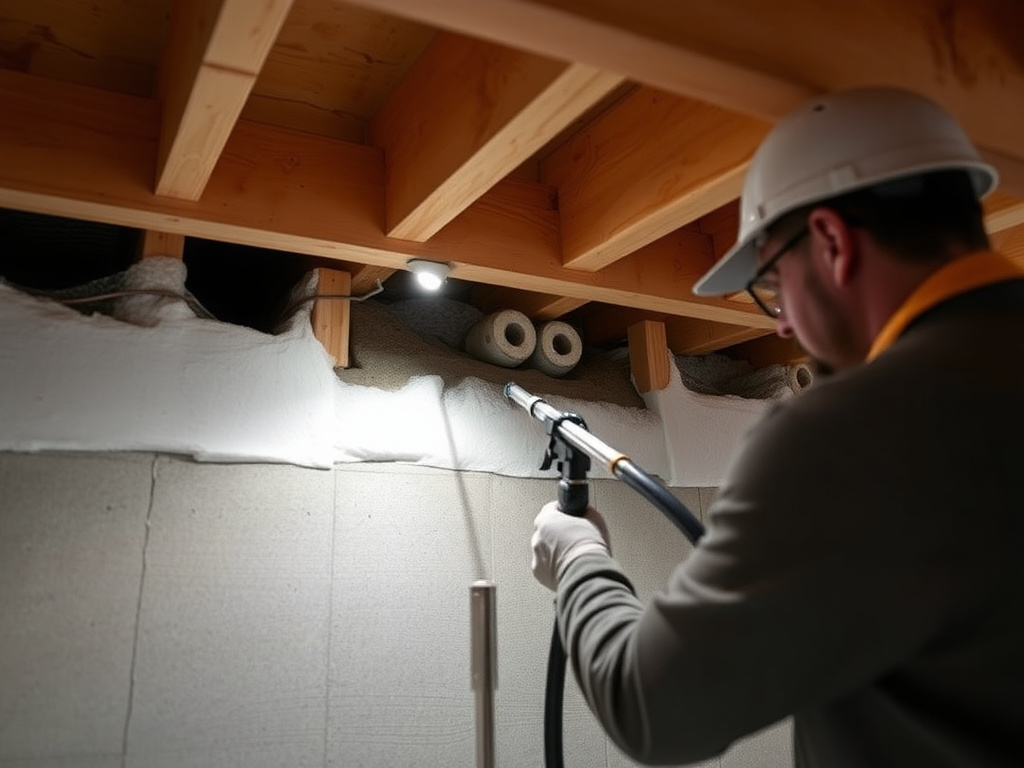
The rim joist (also called the band joist or sill area) is the strip of framing that sits directly on top of the foundation wall, running around the entire perimeter of a basement or crawl space. It's a notoriously difficult area to insulate well with fiberglass batts, because the space is irregular, full of penetrations, and easy for an installer to under-seal — and in a cold climate like Missoula's, an under-insulated rim joist is a major, continuous source of cold-air infiltration and heat loss right at the foundation line.
Closed-cell spray foam is the building-science-recommended material for rim joists in Zone 6 and colder climates specifically because it eliminates the condensation risk that can develop when warm interior air meets a cold, uninsulated band joist. Typically 2 to 3 inches of closed-cell foam is applied across the rim joist band, delivering a meaningful R-value increase in a shallow, hard-to-reach space while sealing every penetration and gap in the same pass. It's one of the most targeted, cost-effective projects we do — a relatively small surface area with an outsized impact on comfort and moisture control.
Why homeowners choose it
- Closes one of the most consistent cold-air infiltration points in a Missoula basement or crawl space.
- Closed-cell foam eliminates the condensation risk that develops when warm interior air meets an uninsulated rim joist in a cold climate.
- A relatively small, contained project with a real, noticeable impact on comfort in the rooms directly above.
- Seals irregular penetrations — wiring, plumbing, dryer vents — that fiberglass batts in this area typically miss or leave gaps around.
- Pairs naturally with a crawl space or basement wall project, or stands alone as its own targeted fix.
Why rim joists get overlooked
Rim joists sit in an awkward zone between the foundation and the framed floor above, and they're easy for a general insulation job to treat as an afterthought — a few batts stuffed in by hand, with no real air-sealing. That's a problem in Missoula's climate specifically, because the rim joist band is directly exposed to outside temperature on one side and framing lumber on the other, making it one of the highest-risk areas in the house for both heat loss and condensation if it isn't sealed correctly.
- 2-3 inches of closed-cell foam is the standard application depth
- Delivers roughly R-11 to R-19 in a shallow, irregular cavity
- Seals every wiring and plumbing penetration in the same pass
Ideal for
- Basements or crawl spaces with visible fiberglass batts stuffed into the rim joist bays
- Homes with cold drafts noticeable near baseboards on the main floor
- Homeowners who've seen moisture, mold, or frost on rim joist framing in winter
- Anyone doing a basement finishing project who wants the envelope sealed correctly first
What affects the cost
Rim Joist Insulation questions, answered
The rim joist (or band joist) is the framing that sits directly on top of your foundation wall, running around the full perimeter of a basement or crawl space. It's directly exposed to outside temperature and is one of the most common places for cold air infiltration and heat loss in a home, especially in a cold climate like Missoula's — but it's also one of the most overlooked areas in a standard insulation job.
You can, but batts don't air-seal the space, and in a cold climate that gap between the batt and the framing is exactly where condensation and moisture problems tend to develop over time. Closed-cell spray foam fills the cavity completely and air-seals it in the same application, which is why it's the building-science-recommended material for rim joists in Zone 6 and colder.
Rim Joist Insulation done right, by a local Missoula crew
Rim Joist Insulation isn't a commodity — the result depends entirely on how carefully it's planned and installed for your specific home and Missoula's real cold mountain-valley climate. We assess what your house actually needs, prep and air-seal properly, and install to your Zone-6B-appropriate R-value target, so the work delivers the comfort and savings it's supposed to.
We serve Missoula, Lolo, Frenchtown, Bonner, Florence, Stevensville, Hamilton, and Clinton. Every job starts with a free, no-pressure quote.
Just as important, we treat your home like the system it is. Insulation, air sealing, and the foundation all interact, and getting one right while ignoring the others leaves comfort and savings on the table. When we scope your rim joist insulation, we look at how it fits the whole picture — so the finished result performs the way it should, holds up through a genuine Missoula winter, and actually lowers the bills you feel every month.
Free assessment
We evaluate your home and give you a clear, itemized quote.
Expert install
We prep, air seal, and install your rim joist insulation to spec — clean and on schedule.
Savings you can feel
A warmer home, lower heating bills, and honest advice about what your home needs.
Related services
Ready for a free rim joist insulation quote?
Tell us about your home and we'll put together a clear, no-pressure spray foam insulation quote — built for Missoula's real mountain-valley winters.